
Nvidia buying AI chip startup Groq’s assets for about $20 billion in its largest deal on record
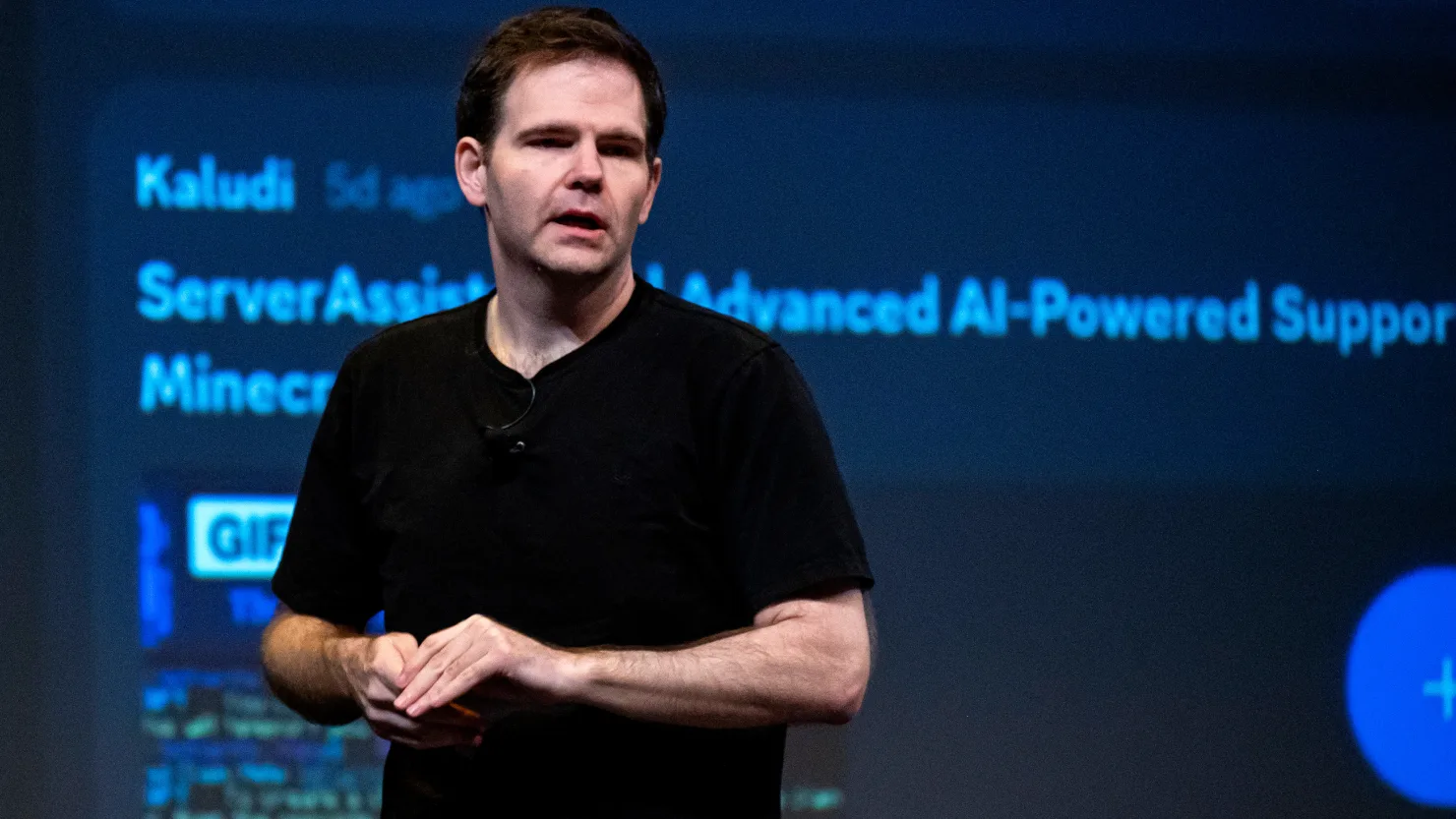
Jonathan Ross, chief executive officer of Groq Inc., during the GenAI Summit in San Francisco, California, US, on Thursday, May 30, 2024.
Nvidia has agreed to acquire key assets from high-performance AI chip startup Groq for $20 billion in cash, according to Alex Davis, CEO of Disruptive, a major investor in the company. The deal—by far Nvidia’s largest ever acquisition—will see Groq’s founder and senior leadership join Nvidia to advance the licensed inference technology, while Groq continues to operate independently under its CFO as CEO.
The transaction underscores Nvidia’s aggressive expansion in AI infrastructure, particularly in the fast-growing inference segment. Groq, which raised $750 million at a $6.9 billion valuation just three months ago, was not actively seeking a sale when Nvidia approached, Davis told CNBC.
Strategic Expansion, Not a Full Acquisition
In an email to employees, Nvidia CEO Jensen Huang emphasized that the company is licensing Groq’s intellectual property and adding talent, but not acquiring Groq as a whole. “We plan to integrate Groq’s low-latency processors into the NVIDIA AI factory architecture, extending the platform to serve an even broader range of AI inference and real-time workloads,” Huang wrote.
Groq confirmed in a blog post that it entered a “non-exclusive licensing agreement” with Nvidia and will continue operating its cloud service independently. This structure mirrors Nvidia’s earlier $900 million deal to hire Enfabrica’s CEO and license its technology—a model also used by tech giants like Meta, Google, and Microsoft to secure top AI talent.
Fueling the AI Arms Race
Nvidia’s cash reserves have ballooned to $60.6 billion, enabling a spree of strategic investments. Beyond Groq, the company has backed AI cloud provider CoreWeave, model developer Cohere, and infrastructure firm Crusoe. In September, Nvidia also announced plans to invest up to $100 billion in OpenAI and $5 billion in Intel as part of a broader partnership push.
Groq, founded by former Google TPU engineers, had been targeting $500 million in revenue this year amid surging demand for AI accelerators optimized for inference tasks. Its trajectory reflects the intense competition in the AI chip space, where startups like Cerebras Systems—which recently postponed its IPO after raising over $1 billion—are also challenging Nvidia’s dominance.
Reshaping the AI Hardware Landscape
The deal accelerates industry consolidation as established players absorb innovative startups to maintain technological leadership. For Nvidia, integrating Groq’s low-latency inference technology could strengthen its position against rivals developing custom chips and alternative architectures. As the AI boom continues to reshape computing, such strategic acquisitions are becoming a key tool for sustaining growth and market influence.
With the transaction, Nvidia not only gains critical inference expertise but also neutralizes a potential competitor—a calculated move in the high-stakes race to define the future of AI infrastructure.
Recent
News



Newsletter
Subscribe to our mailing list to get the new updates!

Subscribe our newsletter to stay updated
Most
Reviews
Politics

Economy
Markets

Economy

Markets

- Thu, 15 Jan 2026